
Why Your Vote Doesn't Count at The Game Awards
...or why only 10%?

We (gamers) don’t get to choose Game of the Year. Game journalists do. And to be precise: it’s 90% journalists and only 10% audience - for almost all awards. Sure, there’s the 100% fan-voted award, but the trophy that matters most is decided almost entirely by the press. A rather disproportionate weight for deciding the “best” game of the year, especially when it goes to a game that wasn’t even a fan favourite (Like Astro Bot in 2024).
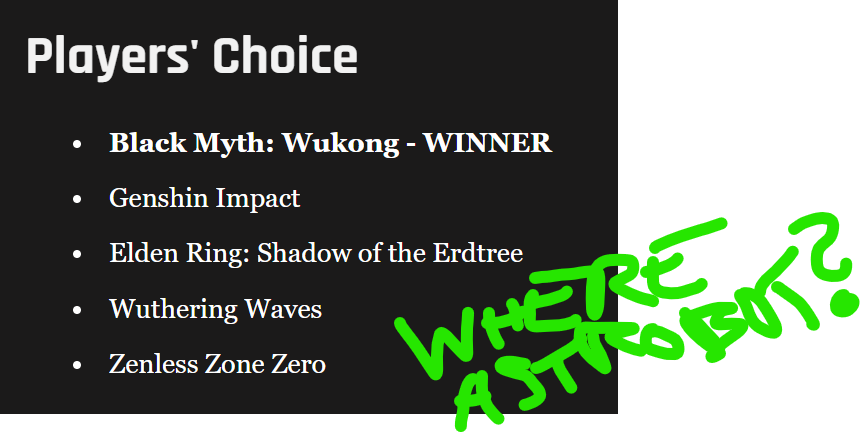
So, Astro Bot, Black Myth, Elden Ring... regardless of game, the question I’m asking:
- Is this a fair system?
- Why do journalists vote, and not industry professionals?
- And why is it 90%?
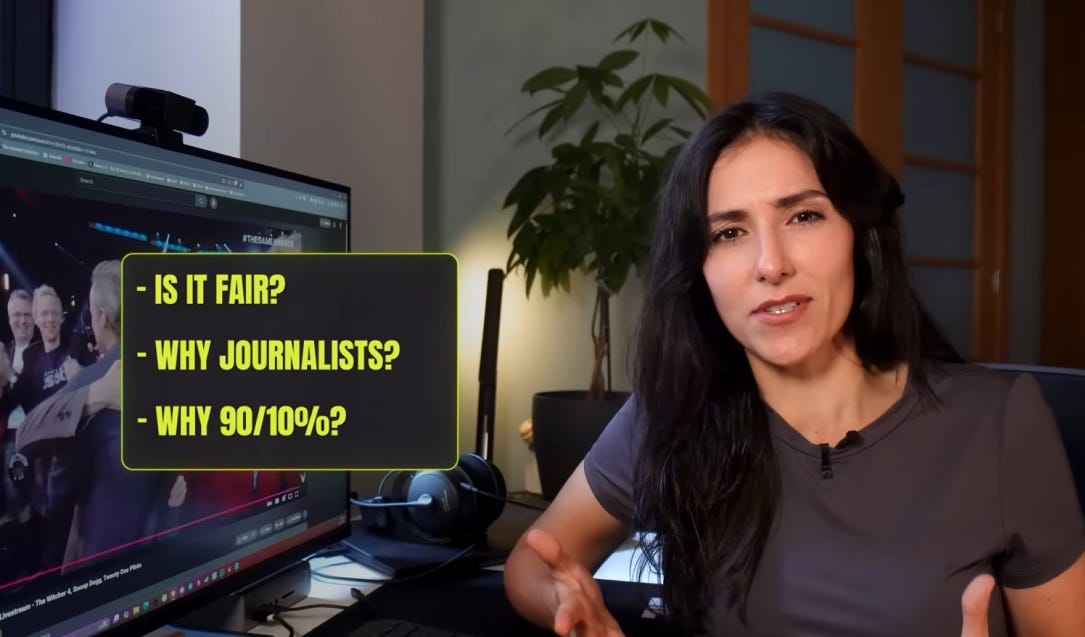
Well, stay with me - because by the end you might realize those 90% aren’t the problem - but the very reason you can trust this award show at all.
I wanted to know what people think makes The Game Awards trustworthy - so I asked, and turns out... no one’s really sure.
Have you ever watched The Game Awards?
Group 1:
“I watch them every year, man, every year.”
“Watched it, yup!”
“And what makes you trust the voting at The Game Awards is actually fair and not rigged?”
“From what I know, the game awards, it’s like half community votes and like three people that judge...”
“Yeah, like people in the community.”
“I think, I think it’s fair, honestly.”
“Yeah.”
Group 2:
“I think the people that vote won’t be biased, so I think they will give their honest opinion, and that’s why I trust it.”
Group 4:
“I don’t really know. I just trust it.”
“I hear the people’s opinions.”
Group 3:
“I think they’re a professional company, and I think they’re really trustworthy counting the votes for The Game Awards.”
Yup, that’s what most people think: big company equals trustworthy. They don’t really know why they trust it, they just do. But trust has to be earned - and The Game Awards - or the Oscars of Gaming - still haven’t technically earned it, because they’re missing that one thing that actually delivers trust. Something every real award show has.
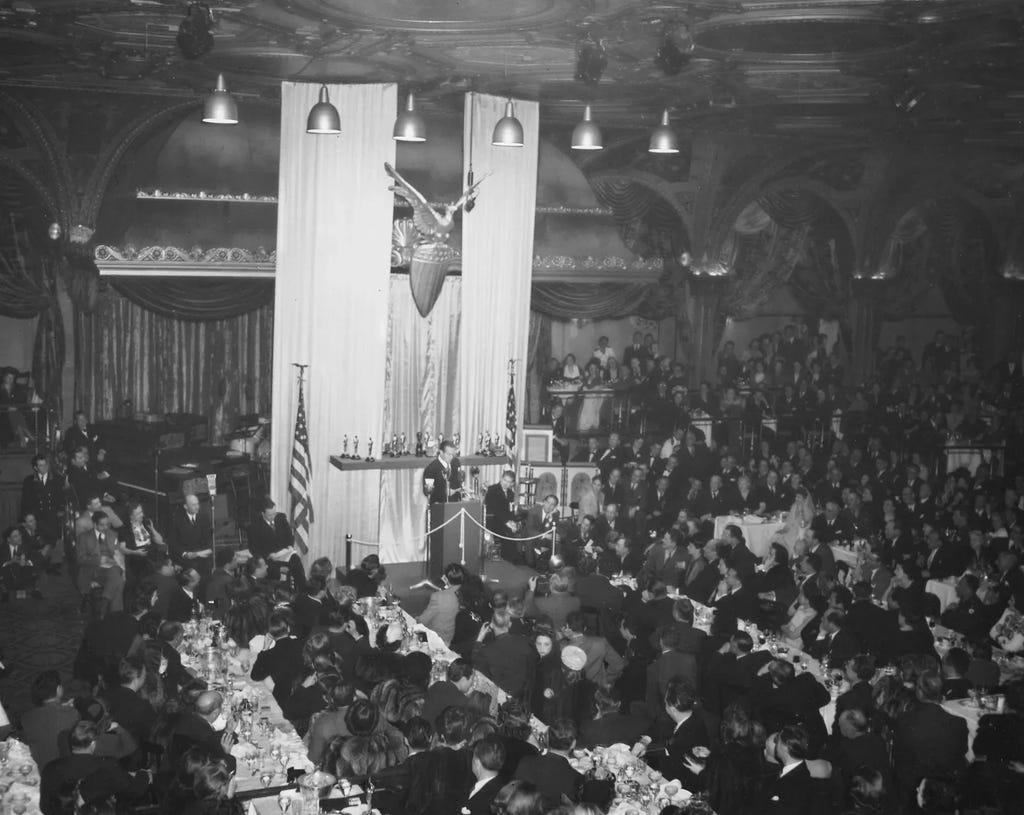
And that something starts here - with the first Oscars. Which, by the way, didn’t have it either a hundred years ago. Which is why it was such a mess. A 15-minute dinner party where Academy members lobbied, rigged, and hosted tea parties to sway votes. Winners were known weeks in advance and the whole thing reeked of backroom deals.
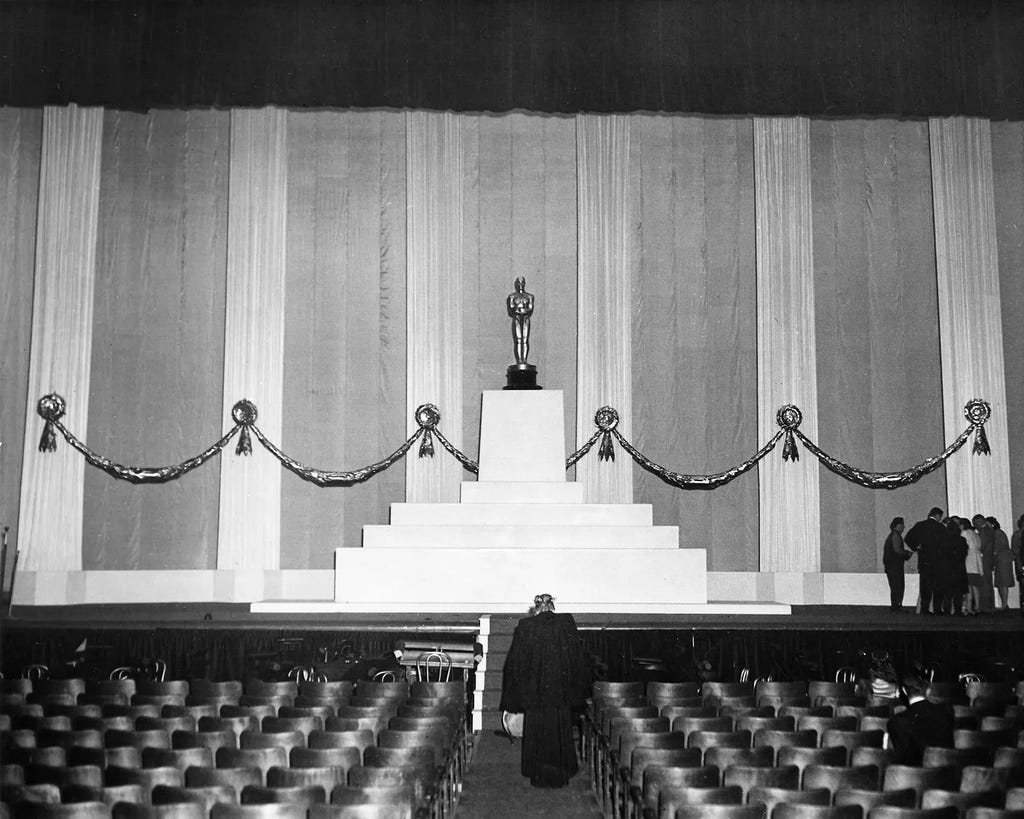
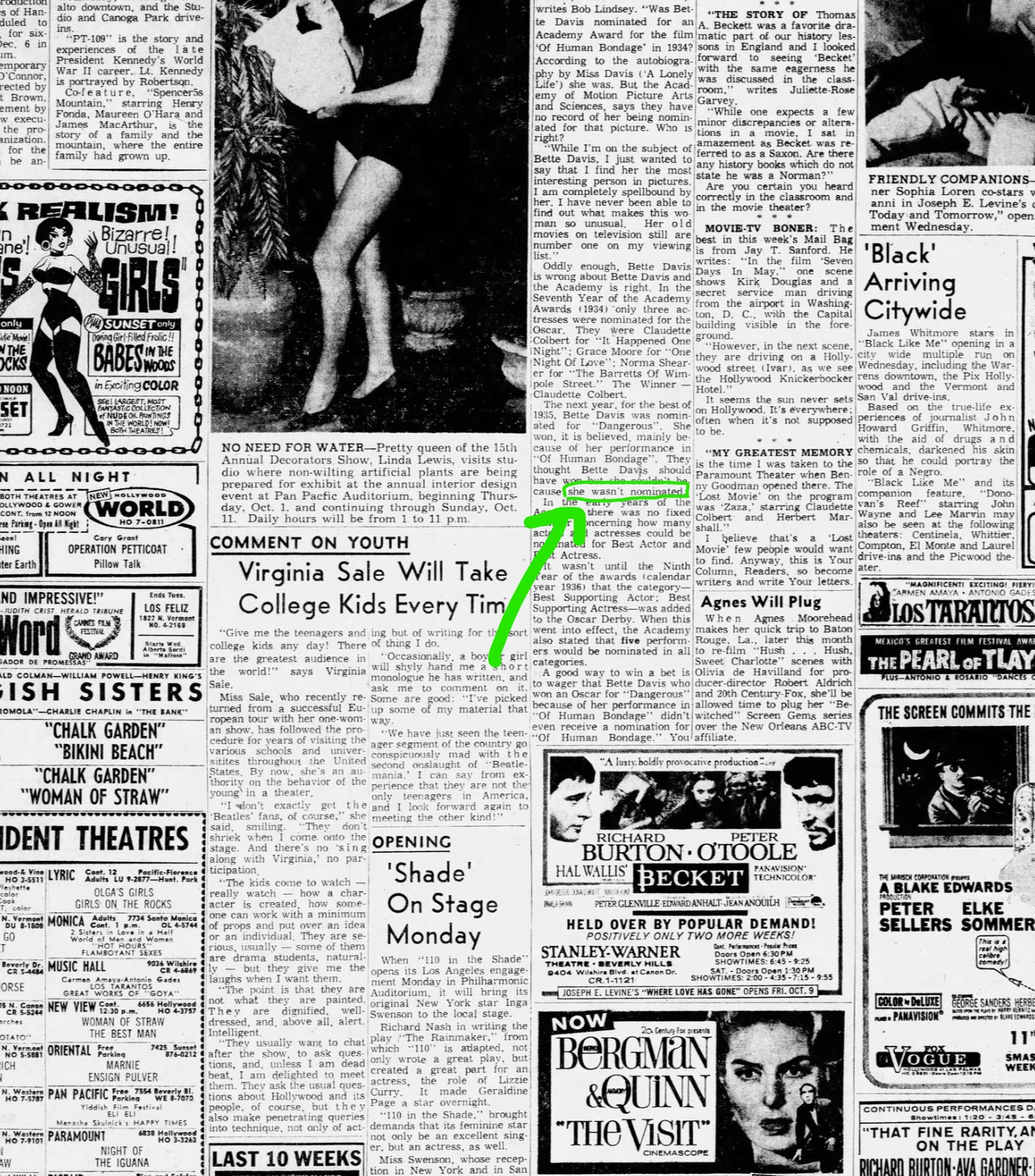
Until 1934 - the year that changed everything. Bette Davis delivered one of cinema’s best performances...
...and got snubbed. Bette didn’t even get a nomination, despite everyone thinking she’d win. Word was, studio execs had rigged the vote. The press lost it. Fans rioted. And the Academy... panicked.
And so, for the first time ever, the Academy brought in that one thing that could stop the rigging: accountants.
In 1935, the Oscars brought in Price Waterhouse, an independent accounting firm, to ensure fair oversight. Two auditors would count every vote independently, cross-check results, memorize the winners and lock duplicate envelopes in briefcases. Only they knew the winners.
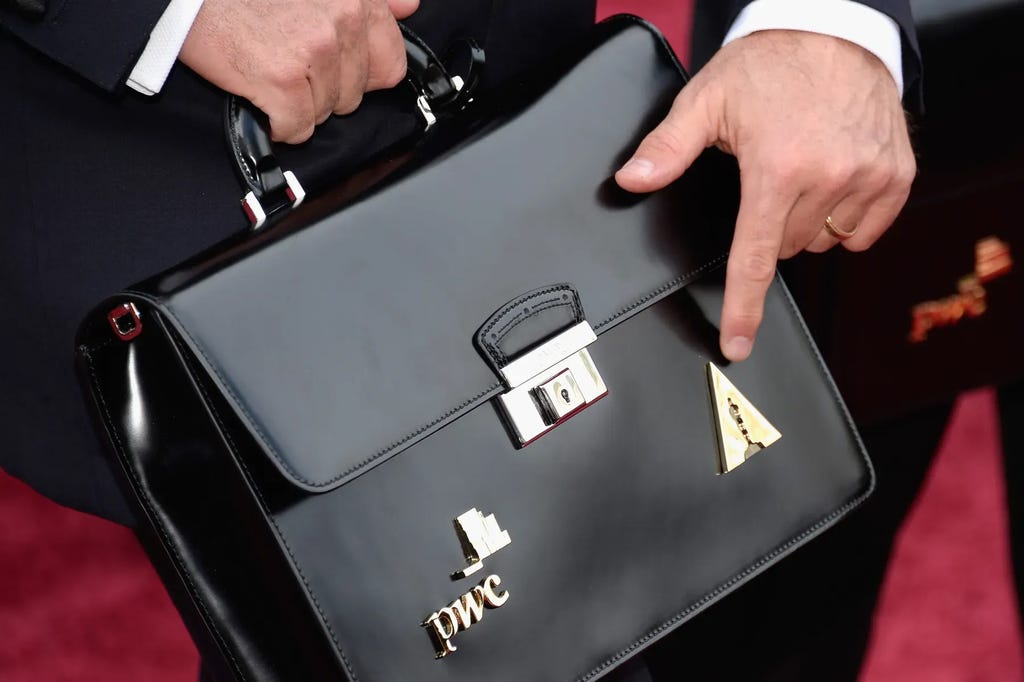
It’s nothing fancy - but it’s how trust gets built. And before we get back to The Game Awards, just know, even the best systems make mistakes. Remember La La Land winning Best Picture?
Except La La Land was not the winner. Because this was not the right envelope.
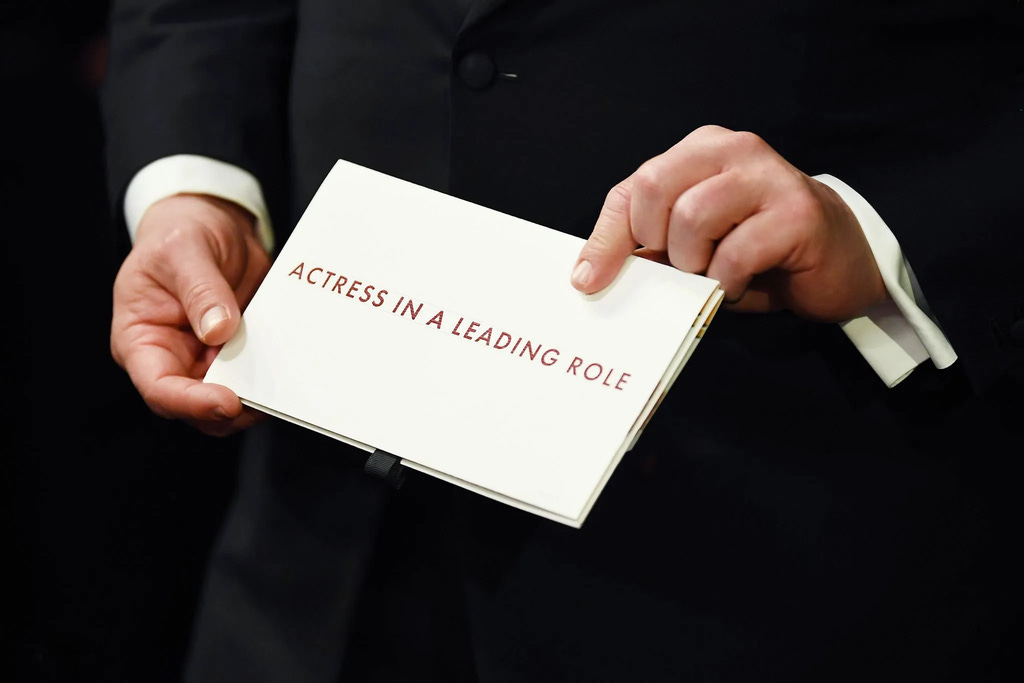
For some reason, the accountant had handed over the wrong one. But it was also he who caught the mistake and fixed it - live on stage.
Just saying, mistakes can happen but this is what fair oversight looks like. And if you’re wondering what any of this has to do with The Game Awards, it’s because gaming had this system too. A long time ago...
Cybermania ‘94. Broadcast live. Very quirky... and Leslie Nielsen as host.
And right there on stage, with him, two accountants from Price Waterhouse, making sure everything stayed accountable and fair.

And guess who was working backstage that night, writing scripts for the hosts? A 14-year-old kid who got the gig through his parents’ connections. His name? Geoff Keighley. A teenage scriptwriter who would - years later - go on to create The Game Awards.
But here’s where it gets interesting: while Geoff - inspired by Cybermania - kept everything as is - the only thing he didn’t keep... were the accountants.

But why would someone cut the one thing that makes awards - and your vote - legit?

Geoff - a former game journalist - clearly didn’t expect that rant - but he didn’t stop it either. Because Geoff doesn’t want it to be gaming’s Oscars and doesn’t need “the Oscars for legitimacy.”
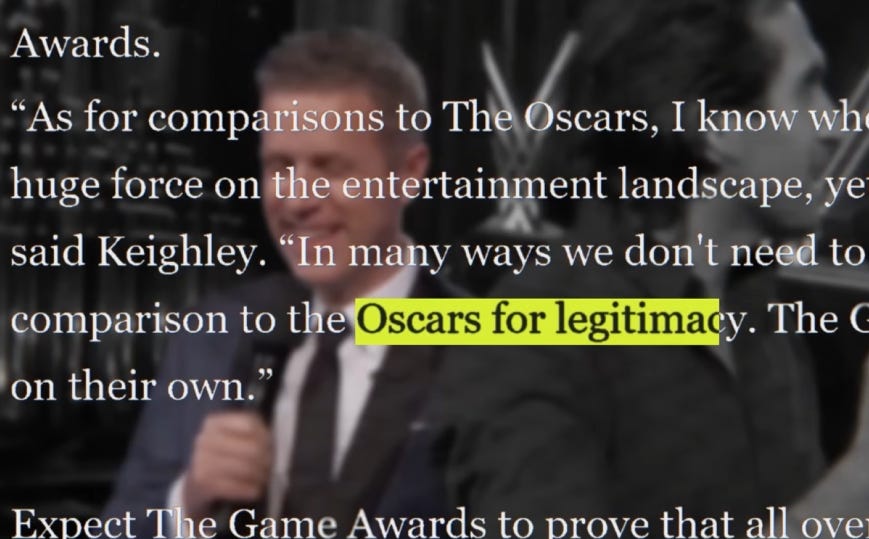
Before The Game Awards, Geoff helped produce Spike TV’s VGA. But when that got too corporate, he built his own show, from scratch and from his own savings. Today, he is the show. Producer. Host. And private owner. Which means no shareholders, no academy, and certainly no accountants.
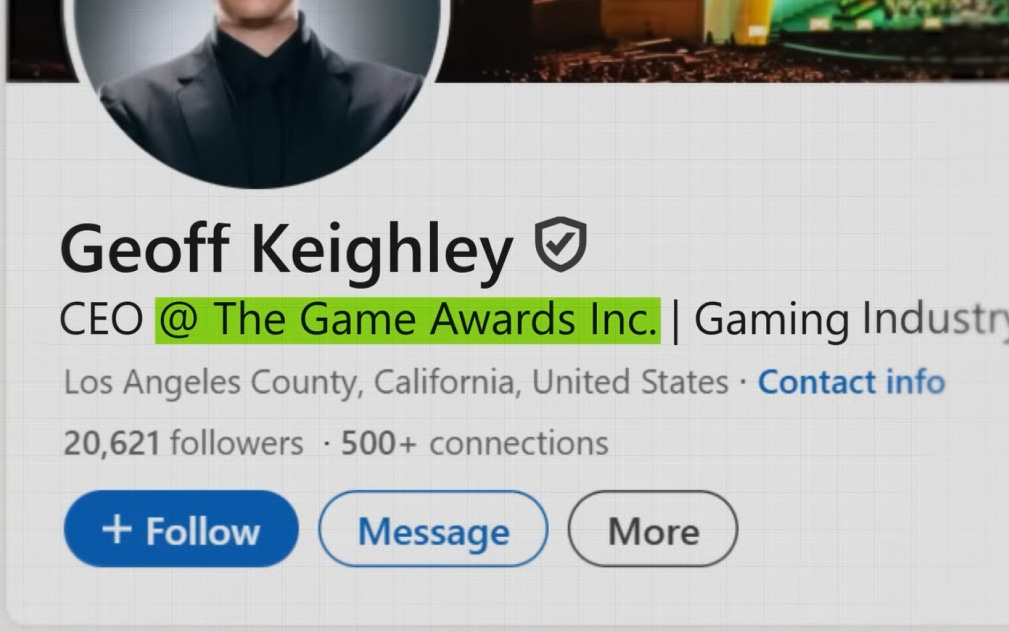
But it also means: there’s no external oversight on what happens behind the curtain. And that’s something Geoff isn’t exactly transparent about. Even Polygon - a jury member - pressed him on this issue “multiple times,” however, to this day, “without any response.”
But why the secrecy? And how do we know it’s fair? Well, let’s first look at who votes - and how.
Do you know who picks the winners?
Group 2:
“The visitors, or the judges.”
“I think both, maybe both.”
Group 3:
“I have honestly no idea who chooses the winners, no idea.”
Group 4:
“Journalists maybe?” - “Yeah journalists.”
Group 1:
“I think it’s only 25% fan votes and rest is jury.”
“I’ve never asked myself the question.”
Let me tell you, it’s actually 10% fan vote...
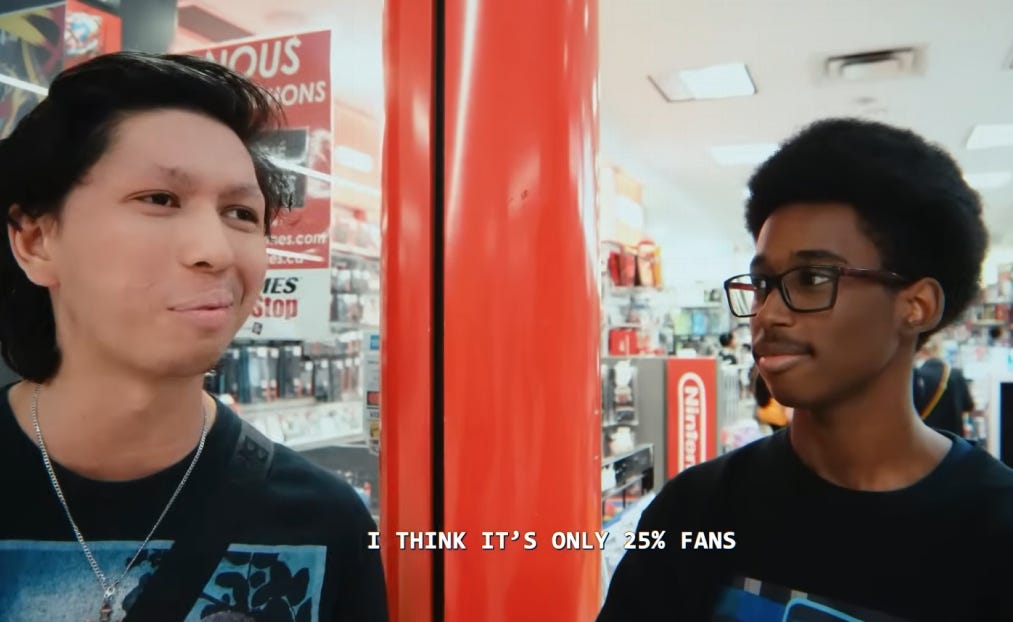
Group 1:
“Ah it’s even lower than this...”
...and 90% journalists.
“Journalists... no way... IGN bro...”
Group 3:
“10% fan vote, oh my god. I never thought that - I thought it was like 40-60%... it’s 90% judges, omg alright.”
Group 4:
“Ah.. makes sense.” - “Not really. I think the opinion of the players is more important than the journalists.”
So are you still trusting The Game Awards?
Group 4:
“No. Not really.” - “Nah, not really.”
Group 2:
“No. Not really. It’s the journalists who vote, it makes no sense.”
Well, seems lik e no one liked the answer. And yet, that’s exactly how it works.
Let’s look at it closer up. At The Game Awards, it’s the press that votes - a jury of 100+ media outlets handpicked by Geoff and his team. There’s no clear selection criteria other than their “history of critical game evaluation.”
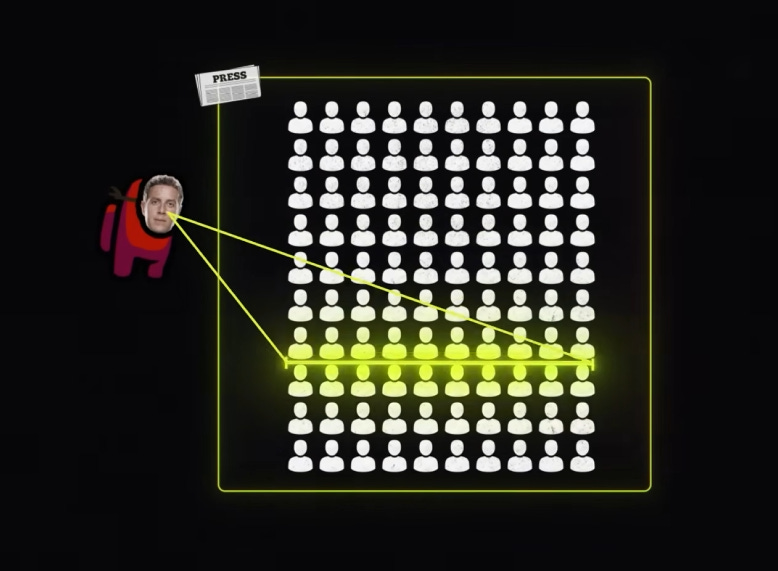
At the Oscars, it’s not the press at all. It’s over 10,000 industry professionals. Actors may only vote for actors, editors for editors, and directors for directors - every vote is therefore peer-reviewed. Except for Best Picture, that’s the only one where everyone gets to vote.
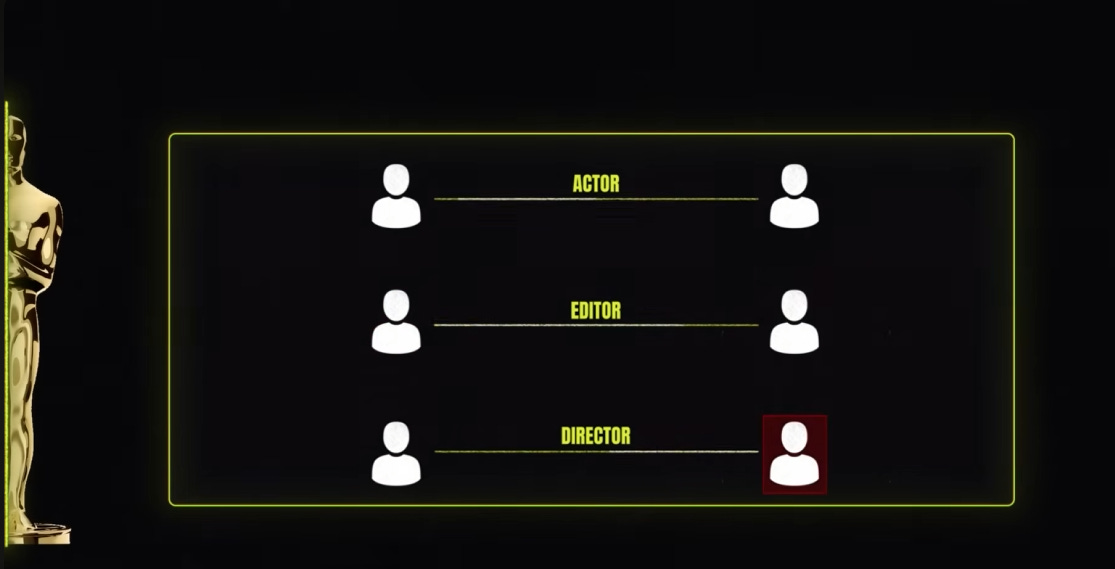
The only rule? Every single member must watch the films they vote on. It’s tracked, so they can’t escape watching them.
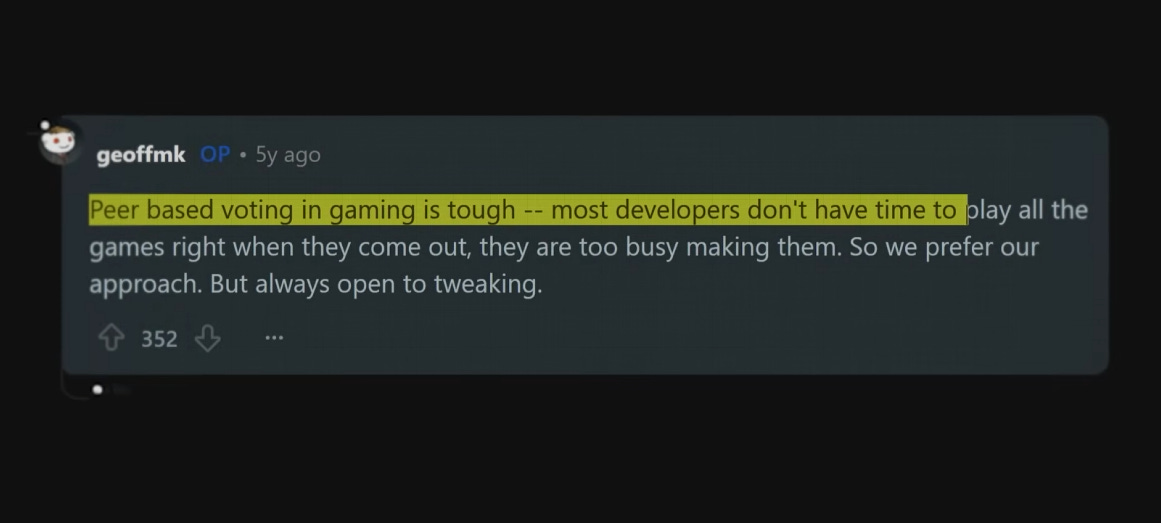
At The Game Awards, no such rule exists. You don’t have to finish a game - or be a game dev. Geoff believes “peer-based voting is tough, as most devs don’t have time to play all the games... they’re too busy making them. We prefer our approach.”
And that approach? Let’s just say it raises more questions than it answers.
Each press outlet submits an unranked list of five games per category.
All ballots are combined and counted. Who counts? Geoff won’t say, but it’s certainly not accountants with briefcases.
Then, for each category, let’s say “BEST RPG” - the five most-mentioned games become the official nominees.
Now let’s imagine these are tonight’s Game of the Year nominees. Each outlet now casts a single vote. Let’s say Expedition gets 43, and the rest less. Meanwhile, millions of fans vote online - and Blue Prince wins by a landslide.
But since jury votes count for 90%, and fan vote only 10%, Expedition takes the win, even though Blue Prince crushed the fan vote.
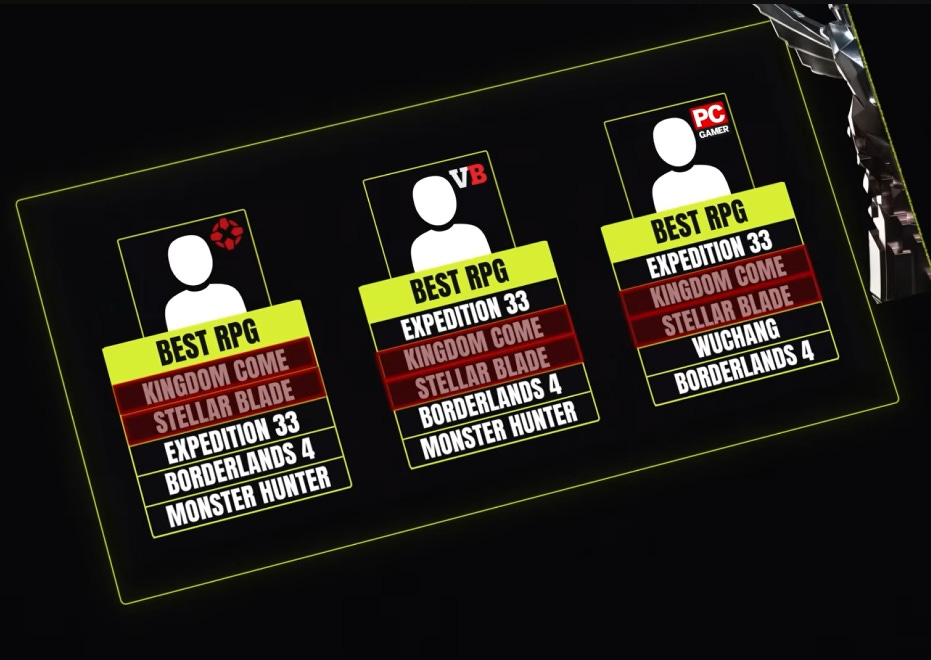
That’s the math. Looks democratic, if you trust the jury speaks for everyone. But how can it, if they don’t even have to finish the game? Some nominees drop just 10 days before the show. Barely enough time to boot it up, let alone judge it. On top, some outlets have deals with the nominees, who have deals with publishers, who have deals with the media...
It seems less like a vote and more like one big biased, sponsor-friendly cuddle puddle, which is why to many “none of the awards really matter - except Players’ Voice, because that’s the one we pick.”
So here’s the question: If the fan vote barely counts... why include it all? What’s Geoff thinking?
Well, Geoff isn’t thinking - he’s doing business. And in business, offering a 10% vote isn’t democracy - it’s marketing.
Your vote isn’t there to give you a voice, but to make you feel like you have one. So you watch the show. And vote. And share. And come back next year. As Geoff himself put it, “There’s a sense of ownership gamers are having over the show.”
Keyword: sense. Because when you vote, it suggests sense of ownership, which makes you more likely to watch the show. It’s not a bug. It’s viewer retention 101.
And it works. Every year, viewership climbs, rivaling the Super Bowl. And it’s also the reason this show exists to begin with: Not because Geoff had a big dream - but because someone had a bigger agenda. Geoff only pulled off the “show after game executives begged him to do it,” saying “game makers are hungry to have their craft [...] recognized [...]”
In other words, publishers were hungry to have their products recognized. Not just by you, but by investors. During Q4. Before Christmas. And in front of millions of potential buyers.
But that still doesn’t explain why fan votes stay locked at 10%.
Well, according to Geoff, more weight would lead to “social engineering” and a “popularity contest.”
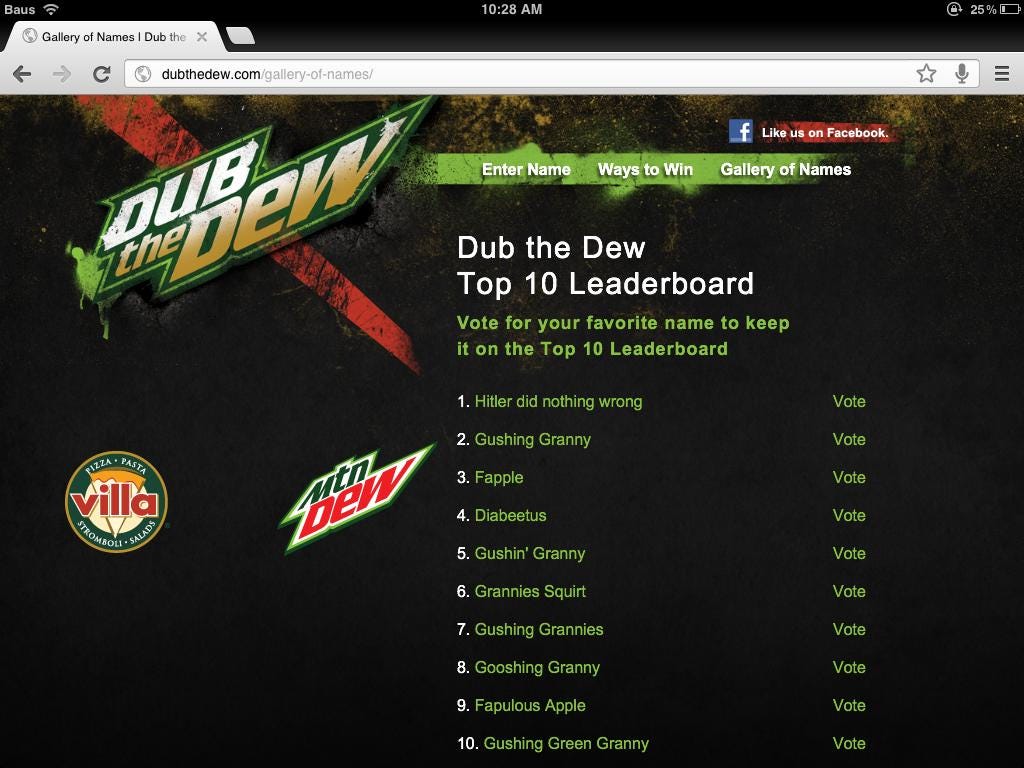
A fair concern, as we all know what happened when Mountain Dew asked fans to name a new flavor and the winner was “Hitler Did Nothing Wrong.”
But still - who should we trust? A hyped up crowd or a small circle of critics?
Some fans say “The Game Awards should be 100% fan voted” - but should it?
Let’s ask some people and then look at some science.
So who should pick the winners, especially the Game of the Year award?
Group 2:
“I think it should be 90% audience, and 10% journalists. The reverse. Reverse the roles.”
Group 4:
“I think it would be 50/50.” - “50/50, or 60/40.”
Group 3:
“I think honestly it should be more fair if it’s 70/30 or 60/40, so that the fans have more power over who’s winning The Game Awards this year.”
Group 1:
“I think that more than half should be fans.”
“I don’t agree, fans is gonna be biased, it’s gonna be hyped. The most hyped game is not always the best game though.”
“Well there’s a reason there is hype, right?”
Well, it turns out, that exact question has already been studied - and the results are surprising.
There’s this idea that if you ask enough people a question, the average answer gets you close to the truth. It’s called The Wisdom of Crowds. And oftentimes, it works. Like when guessing jellybeans in a jar or rating how fun a game is.

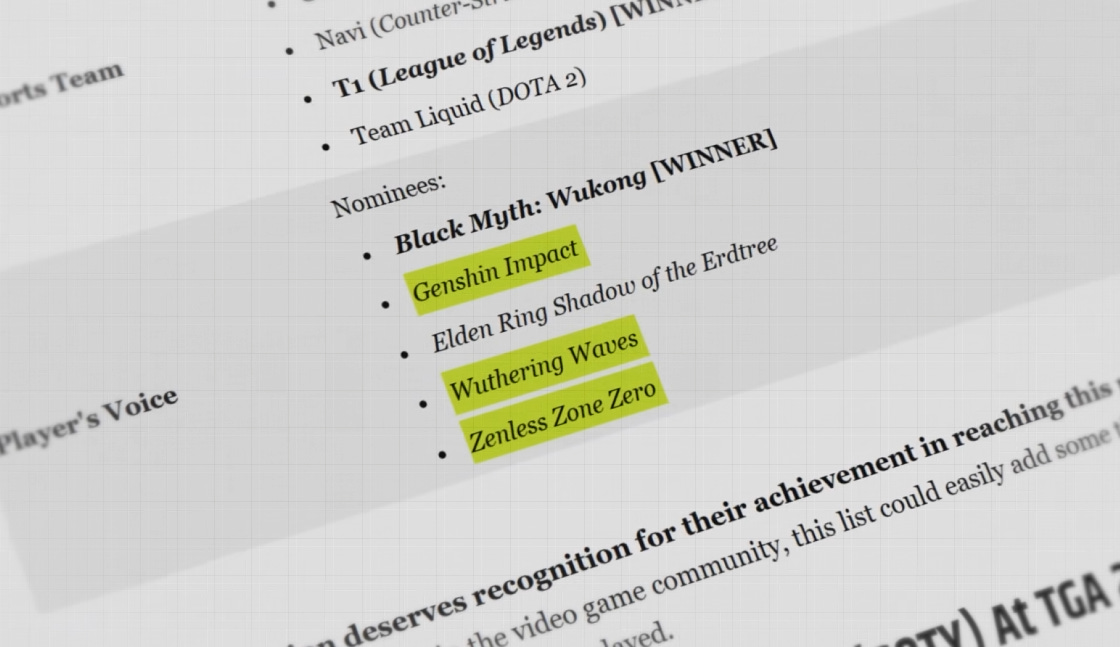
But here’s the twist: that only works when people are making rational estimates about objective facts. The moment you introduce emotions, hype or groupthink, the wisdom collapses, and you see a bunch of gacha games nominated just to make a point.
So what if, instead of chaos, you bring in experts?
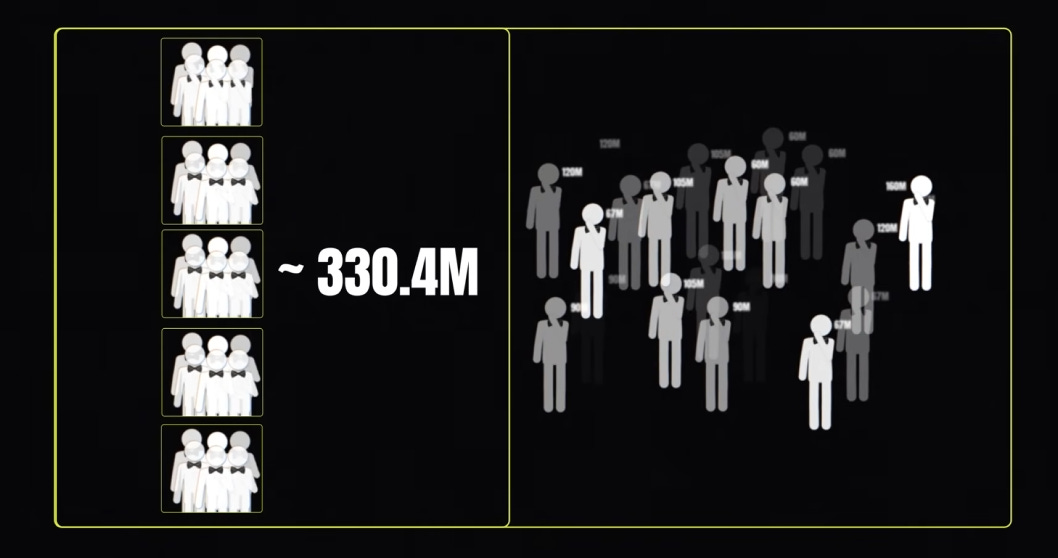
Turns out, that’s been tested. In one study, 5,000 people were asked a simple question - like “How tall is the Eiffel Tower?”
First, they all guessed alone.
Then, they were put into groups of five to debate and agree on an answer.
Then those group answers were averaged.
The result? Just four group answers beat thousands of solo guesses. Why? Because structure beats scale. Crowd wisdom works for guessing jellybeans - not for judging greatness. That’s where experts win.
So now we know that:
A 100% fan vote isn’t ideal (too much groupthink)
Even a 50/50 split still favors the loudest
The 90/10 split feels fair, but gives players just the illusion of influence.
The 100% expert vote works best - but only if they’re actually experts.
And that’s what The Game Awards skip: actual expertise. It’s following the small expert group model, but without the experts. After all, it’s journalists voting, not game devs. Which means the winners often reflect media trends, not excellence. But that’s the real debate, isn’t it? When we ask “who should vote,” what we’re really asking is, “who decides what excellence looks like?” And that’s not a democracy problem. It’s an identity problem.
So when people say The Game Awards are “rigged” - they’re probably wrong. But if they say it’s opaque, editorial, and built for engagement? They might have a point.
And that point is a loud one. “The Game Awards isn’t credible,” “the media shouldn’t be voting,” and “Game of the Year should be abolished.” The backlash is loud and clear. Even Black Myth’s director chimed in, questioning “what the criteria were for picking Game of the Year.”
Well, I’m not sure ‘criteria’ is even the right question here. If you want to have something less questionable, you go to the GDC, BAFTA or Golden Joystick awards - all fairly prestigious and legitimate award shows.
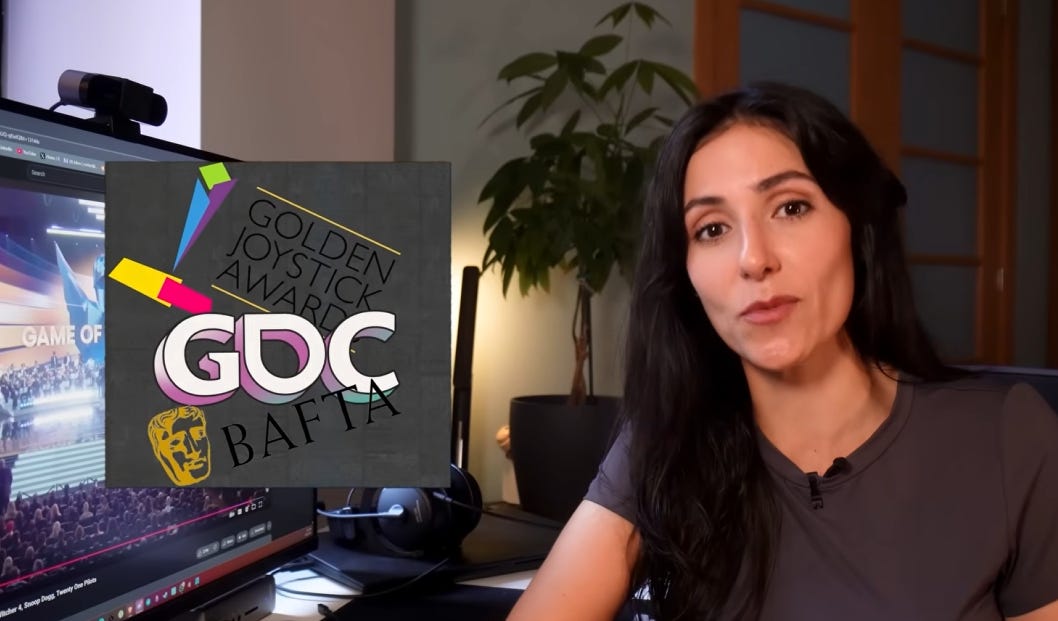
But The Game Awards were never really about the awards - despite the name.
It was always a media show first. Built for publishers, press, and sponsors. It’s a show that was born into an era of Twitch and YouTube, where trailers matter more than trophies. And that’s not a bug. It’s a feature.
Because publishers want “predictability.” Sponsors want “brand-safe winners.” The press wants headlines that delight.
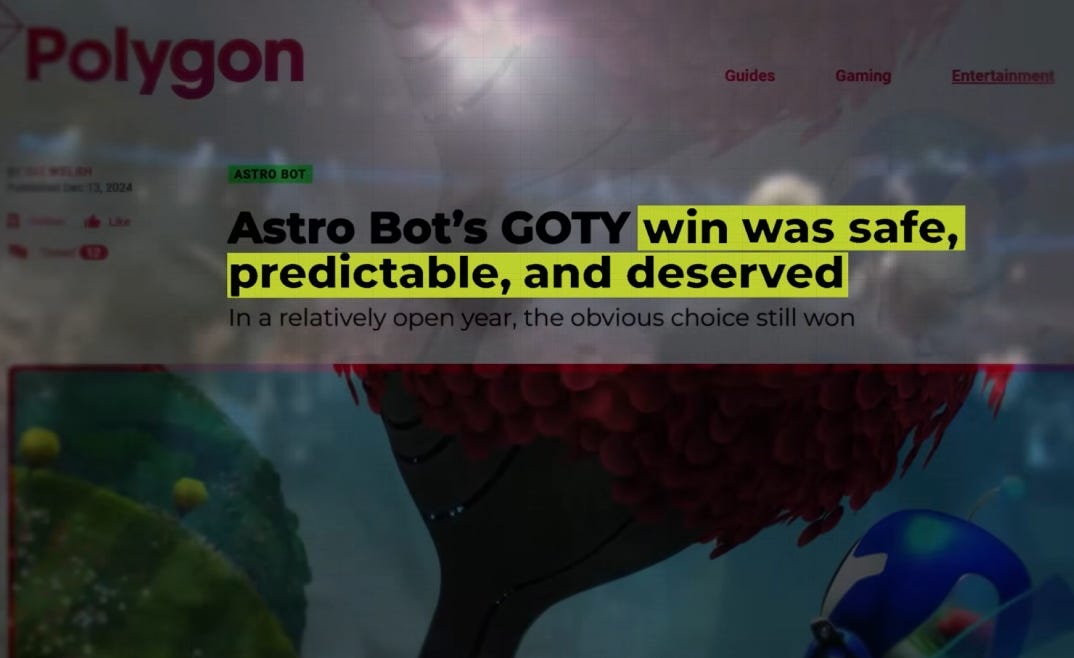
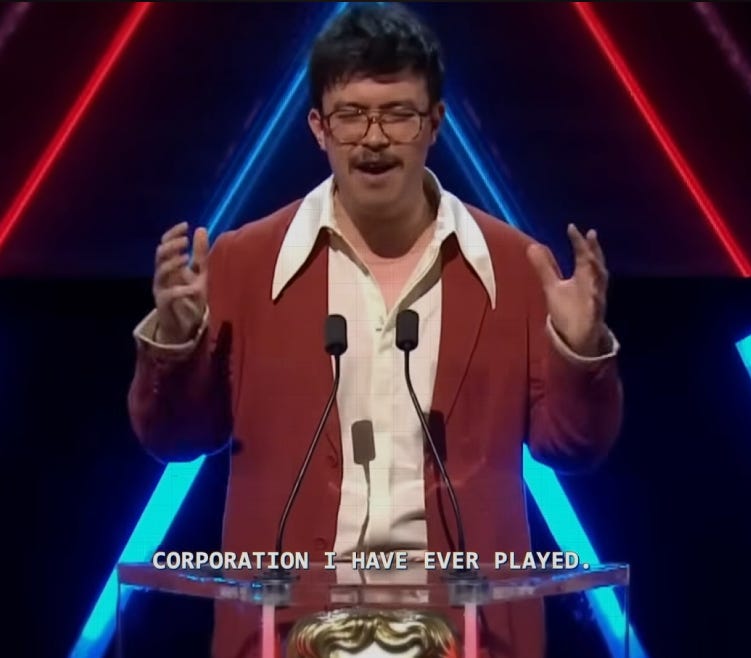
Or, as another award show host put it:
And maybe that’s the point. Maybe it’s time we stop pretending this is about the “best” and start seeing it for what it is: a beautifully produced marketing machine. And that’s fine. Just don’t confuse it with an award show. It’s an illusion. Which is why we don’t choose Game of the Year. A machine does. One where 90% vote, so that the 10% can argue about it.
Happy Voting!